

“Study of best practices and learners’
needs in robotics and STEM education in Europe”
PR1 established the scientific and pedagogical basis for the S.T.E.P.S. robot. By analyzing 50 STEM and robotics practices across five countries and conducting in-depth case studies on 10 selected models, the project defined key requirements for adaptable, cost-effective educational robotics. These foundational insights directly shaped later project phases and led to a scientific Springer publication in April 2025.
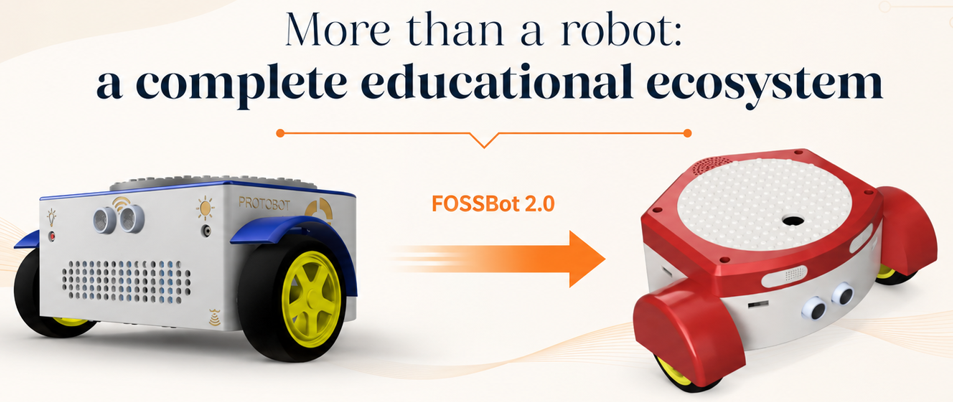
“Design and Development of S.T.E.P.S., the New Generation of Open Source Educational Robot”
PR2 evolved the original FOSSBot into FOSSBot 2.0—transforming the robot into a complete, modular educational platform. Upgrading the existing robot improved its hardware reliability, customizable 3D-printable body, and flexible software, supporting learning paths from block-based to text programming. Paired with a digital twin simulator for virtual testing, both the robot hardware and its supporting software are fully open-source for long-term classroom adaptation.
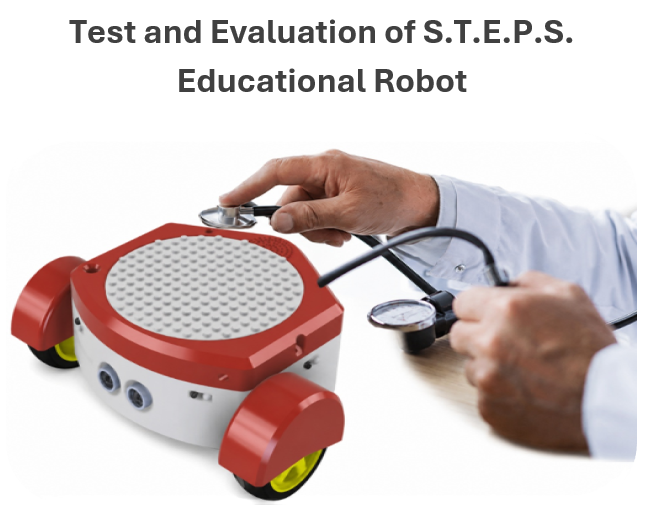
“Test and evaluation of FOSSBot”
The new generation of open source educational robot
● Redesign the body and electronics to allow an easier assembly process
● Less printing time and material
● New peripherals
● Digital twin
● Produce a report outlining the method and phases followed

“FOSSBot 2.0 Instruction Manual”
The manual for the S.T.E.P.S. project is designed for pre-service and in-service secondary school teachers and trainers who wish to incorporate STEM and robotics into their educational practice, even if they have little or no prior experience with these technologies.
Its structure includes detailed instructions on how to:
– download and print the plastic parts of the robot
– buy and assemble the list of electronics and other non-printable parts.
– connect and operate the robot
– program the robot
By offering accessible guidance, this resource aims to increase teachers’ confidence and capacity to use the robot in practice.

“STEPS Pedagogical Manual”
The STEPS project empowers educators to:
– Introduce robotics and programming in the classroom,
– Address curriculum goals through interactive activities,
– Use both physical and virtual tools, ensuring flexibility and equity,
– Design lessons that are age-appropriate, accessible, and interdisciplinary.
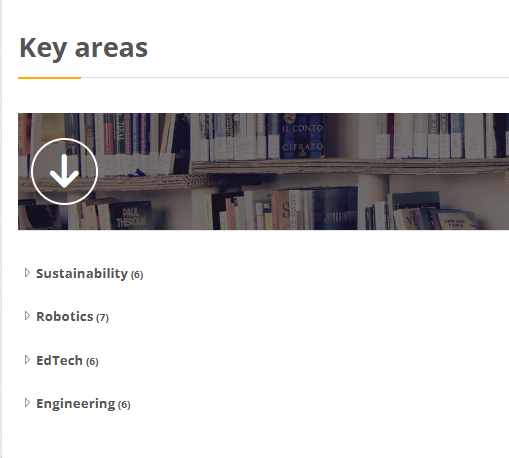
“S.T.E.P.S. School Box”: a Moodle-based MOOC Platform”
Covering four key themes (Programming, Technology, Environmental Protection, Engineering), translated into French, Spanish, Greek, and Turkish, freely accessible to all learners.
“Recommendations for HEI and guidelines to improve the training of pre-service secondary school trainers in STEM and robotics”
Policy-oriented guidance directed at higher education institutions, secondary schools, and national education ministries.